
As higher education institutions navigate the rapid evolution of technology and generative AI, the key to successful adoption lies in maintaining a strong focus on quality, pedagogy, and strategic learning design. The Universitat Oberta de Catalunya (UOC), specifically from the Futures of Education in the Digital Age Research Centre (UOC FuturEd), recently brought these critical discussions to key international educational stages, highlighting ongoing work under the DIGITAsia project alongside complementary initiatives like ADMIT.
Enhancing Higher Education Quality Through DIGITAsia
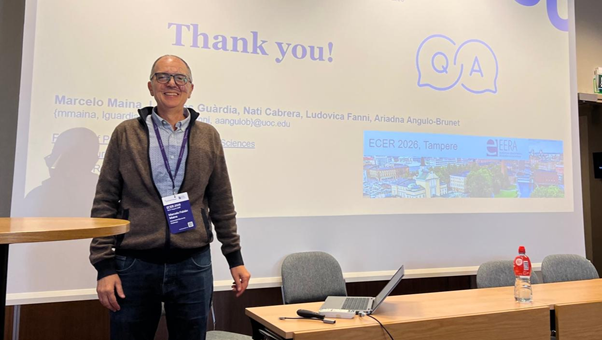
At the European Conference on Educational Research (ECER 2026), hosted at Tampere University in Finland, Marcelo Fabián Maina presented new research directly linked to the DIGITAsia project (Digital Transformation of Asian Higher Education). Delivering the paper titled “Course Quality Scorecard: Making Quality a Tool for Digital Transformation,” Maina highlighted how structured frameworks can serve as strategic drivers for modernizing higher education institutions. Developed in collaboration with UOC co researchers Lourdes Guàrdia, Nati Cabrera, Ariadna Angulo Brunet, and Ludovica Fanni, the research demonstrates how institutional quality assessments can be transformed from static compliance measures into dynamic, actionable instruments for digital innovation.
AI, Learning Design, and Global Educational Dialogues
The ECER 2026 conference also provided a platform to present broader developments in educational design and artificial intelligence. Lourdes Guàrdia presented the “AI LD Framework: Integrating Generative AI into Learning Design,” developed alongside Maina, Cabrera, and Fanni under the ADMIT project. This framework aims to establish the ethical and pedagogical conditions necessary to safely integrate Large Language Models (LLMs) and Generative AI into university teaching and learning.
ECER 2026 offered invaluable opportunities for international collaboration, bringing together researchers to exchange perspectives on the future of higher education with counterparts from Tampere University, Tampere University of Applied Sciences, the University of Helsinki, and the Free University of Bozen Bolzano.
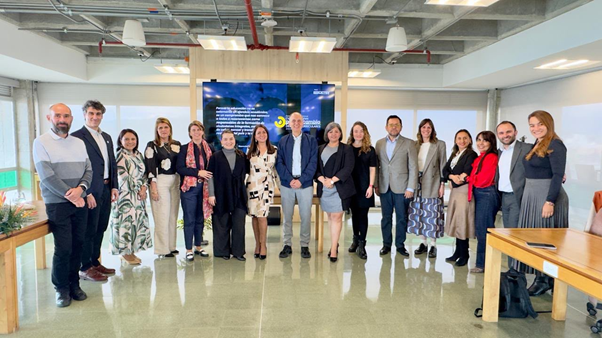
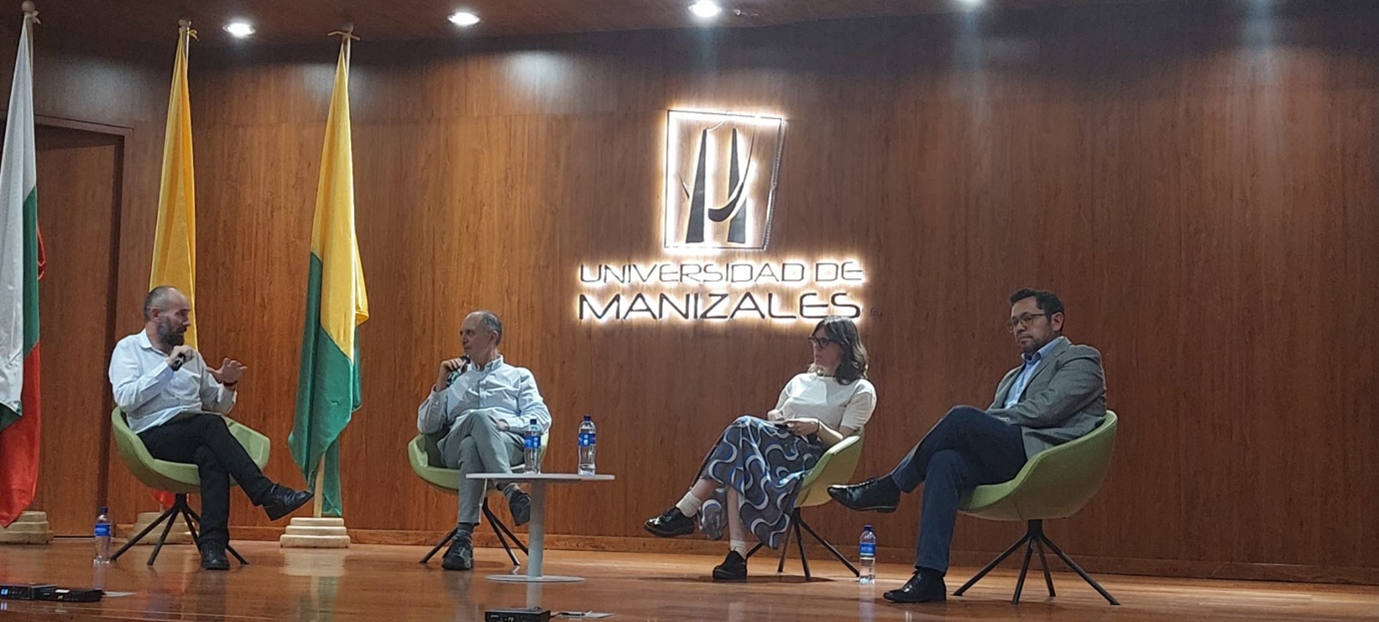
These discussions build upon recent efforts to bridge digital innovation and institutional realities across continents. Earlier this summer, Marcelo Maina addressed these challenges at the International Meeting “Conversations for Change: Curricular Challenges” at the University of Manizales in Colombia. Speaking to an audience of university leaders, educators, and students, Maina reflected on how higher education institutions can innovate without losing sight of their core pedagogical mission, a fundamental objective at the heart of DIGITAsia’s mission to support sustainable digital transformation across higher education ecosystems.